
The Dialysis Unit as a Battlefield
Hepatitis C in Renal Disease, Hemodialysis and TransplantationThis flow follows the transformation of Hemodialysis from a setting of frequent HCV transmission into a setting governed by infection-control discipline.
increasing Bearing strength in each event
 decreasing
Bearing strength in each eventdecreasingHigh Risk Era
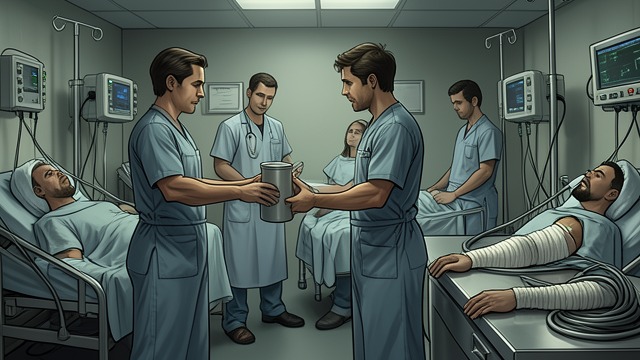
High Risk Era
Multiple routes
Patients in Hemodialysis faced transfusion exposure, repeated vascular access, and possible transmission between stations. Prevalence rose with time on dialysis, even among patients who had never been transfused.
Institutional danger
The unit itself became part of the causal environment. Infection was not only acquired through personal behavior; it could be produced by failures in shared clinical routines.
Isolation Debate

Isolation Debate
Competing strategies
Some centers adopted HCV isolation in hemodialysis units, while others relied on Universal precautions. The disagreement reflected fear of transmission, logistical burdens, and uncertainty about the dialysis machine as a source.
Evidence against separation
Molecular investigations showed that patients could acquire infection without sharing a machine with the source patient. The decisive problem was usually breached hygiene rather than the internal machine circuit.
Hygiene as Resolution

Hygiene as Resolution
Routine becomes protection
Handwashing, gloves, station disinfection, single-use equipment, and careful handling of transducer protectors become the foundation of prevention. Infection control is presented as repeated behavior rather than a special emergency measure.
Continuing vulnerability
Incidence falls, but imported infection, old transfusions, travel dialysis, and occasional breaches remain possible. The unit achieves safety through vigilance, not through the claim that risk has vanished.
early 1990s
mid-1990s to early 2000s
2008 guideline era
